Recycling and Sustainability for Commercial Waste Catford
In Catford and the surrounding boroughs we prioritise an eco-friendly waste disposal area approach for businesses of all sizes. This page outlines how our Catford commercial waste services and sustainable rubbish area strategies reduce landfill, increase reuse and support local circular economy efforts. We balance practical collection solutions with measurable sustainability targets so organisations can demonstrate real environmental improvements while complying with local rules.
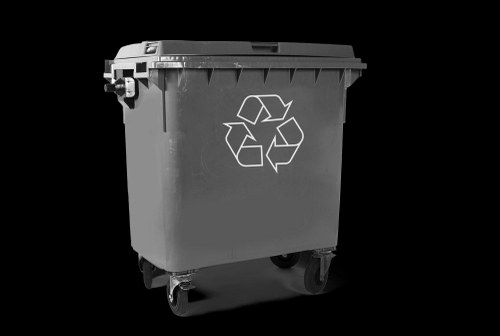 Our core aim is to create a reliable, transparent service so that commercial-waste Catford clients can report progress to stakeholders. We combine on-site segregation, tailored containers and scheduled collections to make recycling straightforward for offices, shops, cafes and light industrial units across the area.
Recycling percentage target and reporting
We set an ambitious recycling percentage target for our Catford operations: 70% diversion from landfill by 2028. That target covers all materials collected from commercial premises, including dry mixed recycling, glass, food waste, textiles and selected construction waste streams. Performance is tracked monthly and reported in clear dashboards so businesses can see their contribution to the sustainable rubbish area goals.
 Local policy shapes how targets are reached. For example, Lewisham and neighbouring boroughs emphasise source separation: separate bins for mixed recycling, food/organics and residual waste, with garden waste collections where appropriate. We align our collections to complement local council schemes so that commercial clients contribute to borough-wide recycling efforts rather than duplicating municipal services.
Low-carbon vans and efficient logistics
Our fleet includes modern, low-carbon vans — electric and Euro-6 diesel models — to lower emissions across the supply chain. These vehicles reduce noise and air pollution in dense neighbourhoods like Catford town centre, helping businesses meet sustainability commitments. Route planning and load optimisation cut unnecessary mileage, further reducing the carbon footprint of commercial rubbish collections.
Local transfer stations and material handling
Collections are consolidated at approved local transfer stations and material recovery facilities so that recyclables are processed efficiently. Typical transfer points used by our network include borough transfer depots and regional MRFs that accept:
- Paper and cardboard
- Mixed dry recycling (plastics, metals, glass)
- Food and organic waste for AD or composting
- Textiles and salvageable furniture for reuse
Partnerships with charities and reuse networks
We work closely with local charities and social enterprises to maximise reuse before recycling. Good-condition furniture, commercial textiles and surplus stock are redirected to vetted charities or community organisations for resale, training programmes or direct community benefit. These partnerships not only reduce waste volumes but also support local social value objectives and extend product life through reuse.
Examples of typical charity partnerships include organisations that accept:
- Office furniture for refurbishment and resale
- Textiles and clothing for reuse or recycling
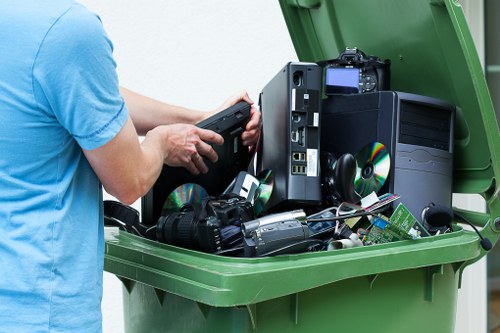
- Electricals routed to WEEE schemes for safe recycling
Creating an sustainable rubbish area starts with simple, repeatable practices on site. We provide clear bin signage, colour-coded containers and staff training to ensure high-quality source separation. Quality of recycling streams is vital: cleaner loads mean higher recovery rates and lower contamination charges at processing facilities.
Operational measures include scheduled waste audits, quarterly reviews with clients, and incentive schemes that encourage tenants or staff to reduce residual waste. When businesses see the cost and carbon benefits, participation rates rise and the local eco-friendly waste disposal area becomes more effective.
Monitoring and transparency are central. Monthly tonnage reports, contamination rates and progress against the recycling percentage target are supplied to customers so the results of improved separation and reuse are visible and auditable.
Circular economy practices and material streams
In Catford we actively manage common commercial streams: paper and cardboard from shops and offices, glass and cans from hospitality venues, food waste from cafés and restaurants, plus construction and demolition arisings from local trades. Where possible we prioritise reuse and repair — for instance, diverting working office equipment and furniture to charity partners rather than sending items for shredding or disposal.
 Community collaboration is key: borough schemes, local businesses and not-for-profits together create economies of scale that make sustainable waste handling affordable. Pooling collections or coordinating charity pickups reduces vehicle movements and opens up more reuse opportunities.
Commitment to lasting change
Our approach to Commercial Waste Catford emphasises measurable outcomes: a clear recycling percentage target, alignment with local transfer stations, active partnerships with charities and a low-emission collection fleet. By combining these elements we support a practical, long-term shift to an eco-friendly waste disposal area across Catford's business community.
We continue to refine methods based on borough guidance and emerging best practice, helping businesses in Catford reduce costs, lower carbon emissions and contribute to a cleaner, more sustainable local environment.
